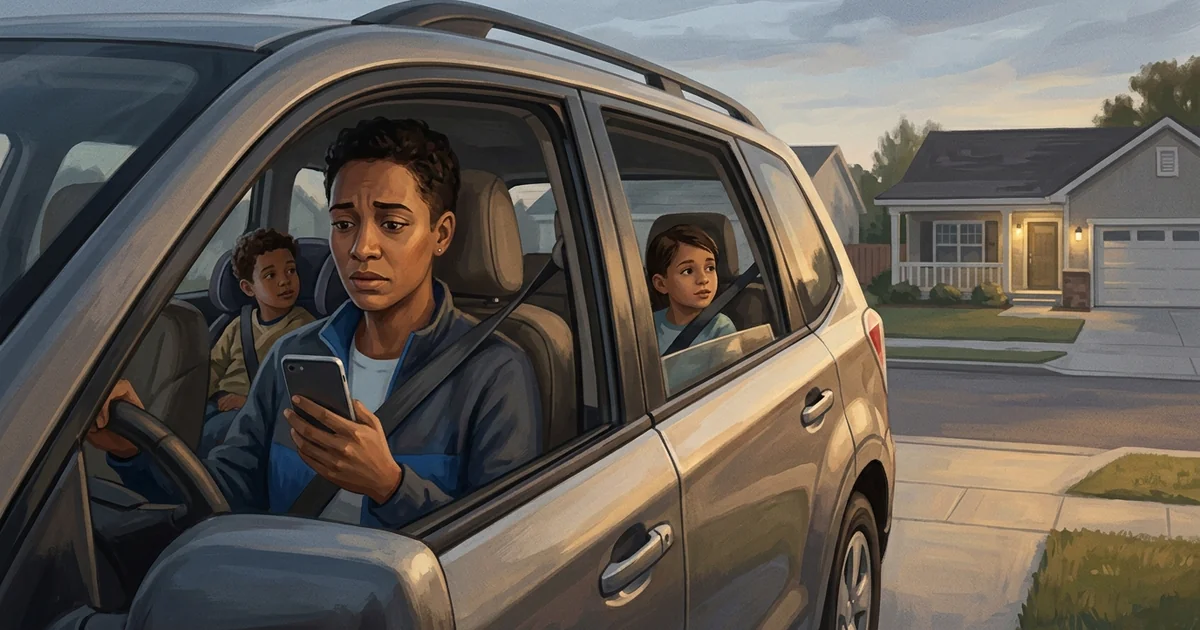
It's 7:42 AM. You're in the driveway with three kids buckled in, the engine running, and one empty booster seat. The fourth kid lives two houses down and you can see the porch light from your windshield. Nobody comes out. You text. No reply. You wait two minutes. Then three. Now you're going to be late, the kids in your back seat are going to be late, and you're doing math in your head about whether to honk or knock or just leave.
Every parent in a carpool has had this morning.
Most no-shows aren't malice. They're a few small, fixable problems compounded by a bad night of sleep. The danger isn't the no-show itself; it's the resentment that builds when you don't have a plan for handling them. Resentment is what actually kills carpools.
Here's how to prevent them, handle them when they happen anyway, and what to do when one family becomes the problem.
Why No-Shows Happen in the First Place

Before you can prevent something, you have to understand it. In rough order of frequency, here are the actual reasons a kid isn't at the curb when the carpool pulls up.
The parent forgot it was their kid's day. Most common. Not a character flaw. If your only schedule lives in a group text from three weeks ago, you're going to forget eventually. The kid is sick and the parent didn't tell anyone yet. They made the call at 7:15 AM and figured they'd text the driver in a minute. A minute became fifteen. The schedule was misunderstood. Two parents both thought the other was driving. Or one thought today was a swap, the other didn't. Last-minute logistics. A parent took the kid in early to meet the teacher. A grandparent showed up unannounced. The car wouldn't start. None of these are unreasonable; they just didn't get communicated. Pure flakiness. Less common than people assume, but it exists. Some families treat the carpool as a backup plan rather than a commitment.The handling depends on which of these you're dealing with. The first job, after the morning is over, is figuring out what actually happened.
Prevention Starts With Setting the Right Expectations

You can't prevent every no-show. Kids will be sick. Cars will break. But most no-shows are preventable with about twenty minutes of upfront work at the start of the carpool.
Write the rules down
Most carpool conflicts come from assumptions nobody bothered to check. The single most useful thing you can do at the start of any carpool is spend twenty minutes drafting a one-page agreement and sharing it with everyone. It doesn't need to be a contract; a shared note in your phone is fine. Cover at minimum:
- Pickup window (e.g. "driver arrives between 7:43 and 7:46")
- How to communicate a same-day cancellation, and the deadline for it (most groups settle on 6:30 AM or "the night before whenever possible")
- How to handle a forgotten turn (does the family owe a make-up day, do they cover gas, do you just absorb it)
- What constitutes "too sick" to ride
- Whether parents need to be visible at pickup or whether kids walk out on their own
Set a daily-confirmation pattern
In the most reliable carpools I've seen, drivers send a short confirmation the night before. "Driving tomorrow, picking up at 7:45." This reminds the other parents that they have a kid going out the door, and it tells you who's awake and replying. If a parent doesn't reply, that's not yet a problem. But if you pull up the next morning and nobody comes out, you have a paper trail.
Build in a buffer for the first month
New carpools are fragile. Plan to leave five minutes earlier than you think you need to for the first three or four weeks. People are still learning each other's houses and routines. You'd rather sit at school for two minutes than be late twice in the first week.
What to Do in the Moment When a Kid Doesn't Come Out
You're in the driveway. Clock is ticking. Here's the sequence that works.
Wait two minutes, then text
Don't sit silently for ten minutes building up annoyance. Two minutes is enough for a kid still tying shoes. After that, send a short text: "Outside, ready when you are." No exclamation points, no edge. The text is a signal, not an accusation.
After four to five minutes total, leave
If you have other kids in the car, your obligation is to them. Send one more message ("Heading out, see you tomorrow") and pull away. This feels rude. It isn't. The other parent's failure to communicate doesn't become your problem to solve in the moment.
If the family is close, knock once
Only do this if it costs you nothing and the family is two doors down. A single knock is sometimes all it takes if a parent overslept. Don't ring twice. Don't peer through windows. One knock, then back to the car.
Don't replay it on the drive
Whatever happened, the kids in your back seat don't need to hear about it. Venting to a six-year-old audience teaches them something about how adults handle conflict, and it's not the lesson you want. Save it for your spouse later.
Follow up the same day, not in the moment
When you have a quiet ten minutes (lunch break, before pickup), send a calm text: "Wanted to check in. Nobody came out this morning, everything okay?" This gives the other parent a chance to explain, apologize, or tell you their kid is in the ER. You'd be surprised how often the answer is something serious. Curious beats accusatory every time, and the tone of that follow-up shapes the rest of the relationship.
The Repeat Offender Conversation
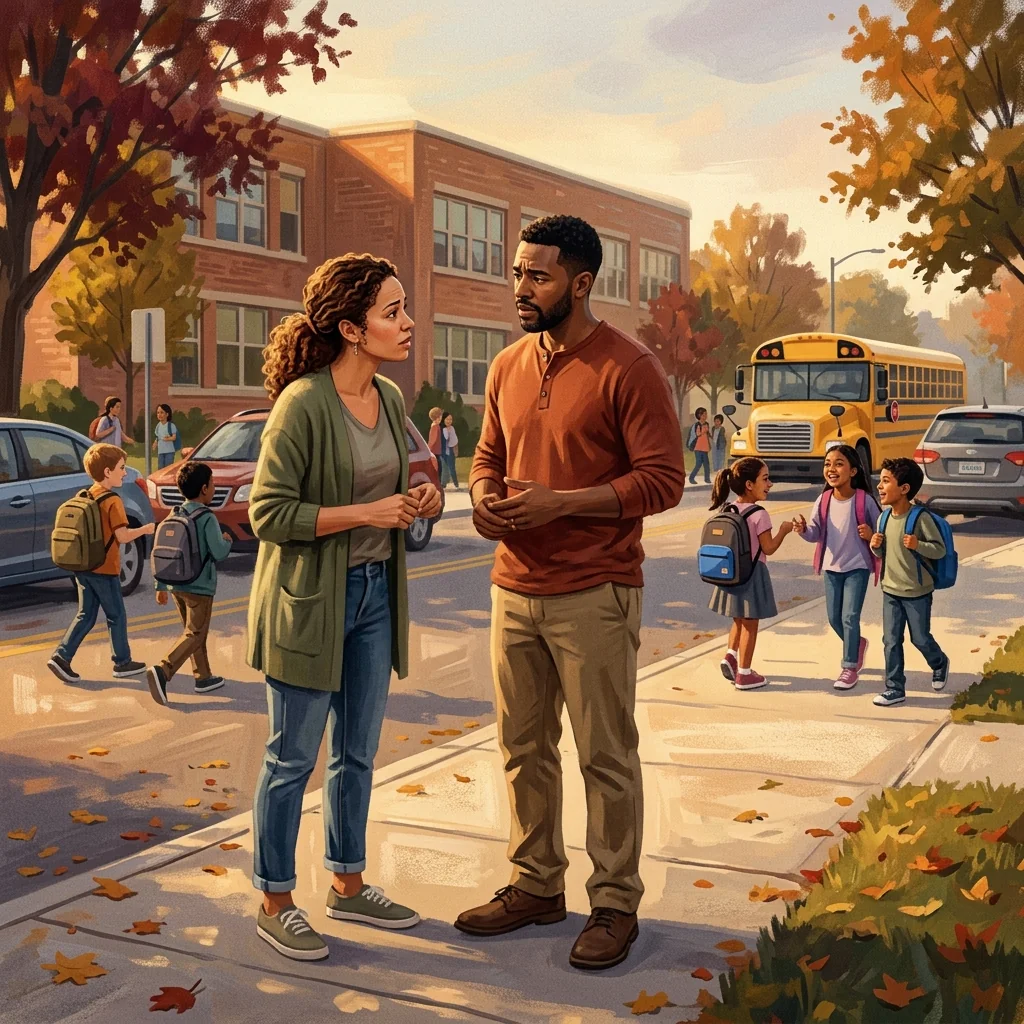
One no-show is a moment. Three is a pattern. If a family has no-showed or canceled last-minute more than two or three times in a month, the carpool isn't working for somebody. You either solve it or you watch the arrangement fall apart.
The instinct most parents have is to avoid the conversation. Drop hints. Let the group text get colder. Schedule "around" the problem family until they get it. This never works. It just stretches fifteen minutes of discomfort over six weeks.
Have it one-on-one, not in the group
Pull the parent aside. Phone call or in person, not text. Group-text confrontations turn into pile-ons and the other parent gets defensive immediately. One-on-one gives them the dignity of responding without an audience.
Open with curiosity
Start by asking, not telling. "Hey, the last few weeks have been bumpy on your end. Is something going on?" Sometimes the answer is "my husband just got laid off." Sometimes it's "my mom's in hospice." You'd be embarrassed to have come in hot. If the answer is something serious, your job changes. You're now figuring out how to give that family a break, not how to discipline them.
If there's no underlying crisis, name the pattern specifically
Vague feedback gets vague responses. Don't say "you've been unreliable." Say "in the last three weeks, your kid wasn't ready twice and there was one morning we didn't hear anything until I was already pulling away. Can we figure out what's going on so it doesn't keep happening?"
Specificity makes it impossible to dismiss and easy to fix.
Offer two paths
Once the pattern is named, give the family a choice. "We can keep the current arrangement if you can give us notice by 6:30 AM when something changes. Or if mornings are just chaotic right now, we can take you out of the rotation for a month and revisit." Both options are real, both are kind, either one solves the problem. If the family rejects both, you have your answer.
Know when to end the arrangement
Sometimes a family isn't a fit, and continuing to absorb their no-shows is unfair to everyone else. If you've had the conversation twice and nothing has changed, removing them is the right call. Be direct: "This isn't working for us. We're going to handle our own rides going forward. No hard feelings, see you at the spring concert." You don't owe anyone a fourth chance.
Where an App Like Carpool-Q Fits In
A lot of no-show problems are really communication problems. The schedule lives in someone's head, last-minute changes don't reach everyone, and there's no shared source of truth for who's driving tomorrow. An app doesn't fix flakiness, but it removes most of the conditions that produce honest no-shows.
The features that actually matter for no-show prevention:
- A live shared schedule so nobody has to ask "wait, is it your day or mine?" The current week is visible in two taps. If a swap happens, everyone sees it.
- Push notifications the night before and morning of, sent to both the driver and the riding families. The driver gets reminded they're up. The riders get reminded their kid is going out the door.
- Same-day cancel notifications that go to the driver immediately when a parent flags their kid as not riding. No more pulling up to an empty house at 7:45.
- Last-minute coverage requests so a parent who can't drive can post a swap and another parent can grab it without a five-message group text.
What an app cannot do is fix a family that doesn't take the carpool seriously. Apps prevent the honest no-shows. The repeat-offender conversation is still on you.
The Quiet Rule Most Parents Miss
Here is the thing nobody puts in the etiquette guides. The single biggest predictor of whether a carpool survives the year isn't the schedule or the app or the rules. It's whether everyone treats the carpool as a real commitment, the same priority as a doctor's appointment.
The families who treat it that way rarely have no-shows. The families who treat it as a convenience that should bend around everything else become the problem. You can usually tell which is which by week three. If you're starting a carpool, pick the first kind.
Frequently Asked Questions
How long should I wait at a no-show before leaving?
Two minutes silent, then a quick text, then leave by the four to five minute mark if you have other kids on board. Your obligation to the kids in your car comes first. Beyond five minutes you are punishing them for someone else's mistake.Should I charge a no-show fee?
Most carpools I've seen don't, and adding money usually makes things weirder, not better. A more common arrangement is "you owe a make-up day" (the family that no-showed picks up an extra driving turn). This keeps the labor balanced without turning the carpool into a small business.What if my own kid causes the no-show because they refused to get ready?
Be honest with the carpool. "We had a meltdown morning, that's on us. I'll cover an extra day next week." Owning it openly gets way more grace than pretending nothing happened. Every parent in the group has had a meltdown morning.When is it okay to remove a family from a carpool?
After at least one direct, specific conversation that didn't produce a change. Removing someone without first having that conversation is unfair. Removing someone after two failed conversations is fair, and probably overdue.Does it matter what kind of carpool app we use, or is any of them fine?
Any shared-schedule app with push notifications beats a group text by a wide margin. The differences between apps are mostly pricing model (per family vs. flat) and whether they handle complicated cases like sports carpools with shifting locations. Carpool-Q is what I'd pick. Pick whatever your group will actually open.The Goal Isn't Zero No-Shows
You won't eliminate no-shows entirely. People are people, kids get sick, mornings come apart. The goal is to reduce them to a few a year, handle the ones that happen with grace, and address the patterns before they end your carpool.
Set clear expectations up front, use a shared schedule with notifications, and have one honest conversation when something starts to slip. That's most of the job.
Try Carpool-Q free for 14 days if you want a shared schedule with notifications. If a different tool gets your group on the same page, use that one. The point is the practice, not the app.